People Working On A Construction Job
Construction Laborers and Helpers
- Summary
- What They Do
- Work Environment
- How to Become One
- Pay
- Job Outlook
- State & Area Data
- Similar Occupations
- More Info
Summary
Please enable javascript to play this video.
Video transcript available at https://www.youtube.com/watch?v=s1n6nBhVzdo.
| Quick Facts: Construction Laborers and Helpers | |
|---|---|
| 2020 Median Pay | $37,080 per year $17.83 per hour |
| Typical Entry-Level Education | See How to Become One |
| Work Experience in a Related Occupation | None |
| On-the-job Training | Short-term on-the-job training |
| Number of Jobs, 2020 | 1,514,200 |
| Job Outlook, 2020-30 | 7% (As fast as average) |
| Employment Change, 2020-30 | 109,100 |
What Construction Laborers and Helpers Do
Construction laborers and helpers perform many tasks that require physical labor on construction sites.
Work Environment
Most construction laborers and helpers typically work full time and do physically demanding work. Some work at great heights or outdoors in all weather conditions. Construction laborers have one of the highest rates of injuries and illnesses of all occupations.
How to Become a Construction Laborer or Helper
Construction laborers and helpers learn their trade through on-the-job training. Formal education is not typically required.
Pay
The median annual wage for construction laborers and helpers was $37,080 in May 2020.
Job Outlook
Overall employment of construction laborers and helpers is projected to grow 7 percent from 2020 to 2030, about as fast as the average for all occupations.
About 167,800 openings for construction laborers and helpers are projected each year, on average, over the decade. Many of those openings are expected to result from the need to replace workers who transfer to different occupations or exit the labor force, such as to retire.
State & Area Data
Explore resources for employment and wages by state and area for construction laborers and helpers.
Similar Occupations
Compare the job duties, education, job growth, and pay of construction laborers and helpers with similar occupations.
More Information, Including Links to O*NET
Learn more about construction laborers and helpers by visiting additional resources, including O*NET, a source on key characteristics of workers and occupations.
What Construction Laborers and Helpers Do About this section
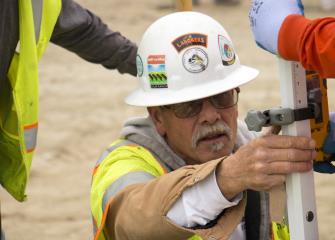
Construction laborers and helpers assist craftworkers.
Construction laborers and helpers perform many tasks that require physical labor on construction sites.
Duties
Construction laborers and helpers typically do the following:
- Clean and prepare construction sites by removing debris and possible hazards
- Load or unload building materials to be used in construction
- Build or take apart bracing, scaffolding, and temporary structures
- Dig trenches, backfill holes, or compact earth to prepare for construction
- Operate or tend equipment and machines used in construction
- Follow construction plans and instructions from supervisors or more experienced workers
- Assist craftworkers with their duties
Construction laborers and helpers work on almost all construction sites, performing a wide range of tasks varying in complexity from very easy to extremely difficult and hazardous.
Construction laborers , also referred to as construction craft laborers, perform a wide variety of construction-related activities during all phases of construction. Many laborers spend their time preparing and cleaning up construction sites, using tools such as shovels and brooms. Other workers, such as those on road crews, may specialize and learn to control traffic patterns and operate pavement breakers, jackhammers, earth tampers, or surveying equipment.
With special training, laborers may help transport and use explosives or run hydraulic boring machines to dig out tunnels. They may learn to use lasers to place pipes and to use computers to control robotic pipe cutters. They may become certified to remove asbestos, lead, or chemicals.
Helpers assist construction craftworkers, such as electricians and carpenters, with a variety of tasks. They may carry tools and materials or help set up equipment. For example, many helpers work with cement masons to move and set the forms that determine the shape of poured concrete. Many other helpers assist with taking apart equipment, cleaning up sites, and disposing of waste, as well as helping with any other needs of craftworkers.
Many construction trades have helpers who assist craftworkers. The following trades have associated helpers:
- Brickmasons, blockmasons, and stonemasons, and tile and marble setters
- Carpenters
- Electricians
- Painters, paperhangers, plasterers, and stucco masons
- Pipelayers, plumbers, pipefitters, and steamfitters
- Roofers
Work Environment About this section
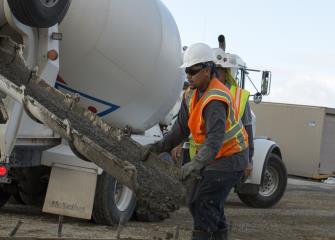
Construction laborers and helpers wear gloves, safety glasses, and other protective gear.
Construction laborers and helpers held about 1.5 million jobs in 2020. Employment in the detailed occupations that make up construction laborers and helpers was distributed as follows:
| Construction laborers | 1,285,200 |
| Helpers--electricians | 75,500 |
| Helpers--pipelayers, plumbers, pipefitters, and steamfitters | 56,200 |
| Helpers--carpenters | 31,000 |
| Helpers, construction trades, all other | 27,800 |
| Helpers--brickmasons, blockmasons, stonemasons, and tile and marble setters | 20,900 |
| Helpers--painters, paperhangers, plasterers, and stucco masons | 9,400 |
| Helpers--roofers | 8,200 |
The largest employers of construction laborers and helpers were as follows:
| Specialty trade contractors | 34% |
| Self-employed workers | 21 |
| Construction of buildings | 18 |
| Heavy and civil engineering construction | 16 |
| Temporary help services | 3 |
Most construction laborers and helpers perform physically demanding work. Some work at great heights or outdoors in all weather conditions; others may be required to work in tunnels. They must use earplugs around loud equipment and wear gloves, safety glasses, and other protective gear.
Injuries and Illnesses
Construction laborers and helpers, construction trades, all other have some of the highest rates of injuries and illnesses of all occupations. ("All other" titles represent occupations with a wide range of characteristics that do not fit into any of the other detailed occupations.)
Workers may experience cuts from materials and tools, fatal and nonfatal falls from ladders and scaffolding, and burns from chemicals or equipment. Some jobs expose workers to harmful materials, fumes, or odors, or to dangerous machinery. Workers may also experience muscle fatigue and injuries related to lifting and carrying heavy materials.
Work Schedules
Like many construction workers, most laborers and helpers work full time. Although they must sometimes stop work because of bad weather, they may work overtime to meet deadlines. Laborers and helpers on highway and bridge projects may need to work overnight to avoid causing major traffic disruptions. In some parts of the country, construction laborers and helpers may work only during certain seasons. For example, in northern climates, cold weather frequently disrupts construction activity in the winter.
Some construction laborers are self-employed. In contrast, very few helpers are self-employed.
How to Become a Construction Laborer or Helper About this section

While formal education is not required to enter the occupation, some construction laborers take classes as part of an apprenticeship.
Construction laborers and helpers learn their trade through on-the-job training (OJT). The length of training depends on the employer and the specialization. Formal education is not typically required.
Education
Although formal education is not typically required for most positions, helpers of electricians and helpers of pipelayers, plumbers, pipefitters, and steamfitters typically need a high school diploma. High school classes in mathematics, blueprint reading, welding, and other vocational subjects can be helpful.
Training
Construction laborers and helpers typically learn through OJT after being hired by a construction contractor. Workers usually learn by performing tasks under the guidance of experienced workers.
Although the majority of construction laborers and helpers learn by assisting experienced workers, some construction laborers may opt for apprenticeship programs. These programs generally include 2 to 4 years of technical instruction and OJT. The Laborers' International Union of North America (LIUNA) requires a combination of OJT and related classroom instruction in such areas as signaling, blueprint reading, using proper tools and equipment, and following health and safety procedures. The remainder of the curriculum consists of specialized training in one of these eight areas:
- Building construction
- Demolition and deconstruction
- Environmental remediation
- Road and utility construction
- Tunneling
- Masonry
- Landscaping
- Pipeline construction
Licenses, Certifications, and Registrations
Laborers who remove hazardous materials (hazmat) must meet the federal and state requirements for hazardous materials removal workers.
Depending on the work they do, laborers may need specific certifications, which may be attained through LIUNA. Rigging and scaffold building are commonly attained certifications. Certification can help workers prove that they have the knowledge to perform more complex tasks.
Advancement
Through experience and training, construction laborers and helpers can advance into positions that involve more complex tasks. For example, laborers may earn certifications in welding, erecting scaffolding, or finishing concrete, and then spend more time performing those activities. Similarly, helpers sometimes move into construction craft occupations after gaining experience in the field. For example, experience as an electrician's helper may lead someone to becoming an apprentice electrician.
Important Qualities
Color vision. Construction laborers and helpers may need to be able to distinguish colors to do their job. For example, an electrician's helper must be able to distinguish different colors of wire to help the lead electrician.
Math skills. Construction laborers and some helpers need to perform basic math calculations while measuring on jobsites or assisting a surveying crew.
Mechanical skills. Construction laborers are frequently required to operate and maintain equipment, such as jackhammers.
Physical stamina. Construction laborers and helpers must have the endurance to perform strenuous tasks throughout the day. Highway laborers, for example, spend hours on their feet—often in hot temperatures—with few breaks.
Physical strength. Construction laborers and helpers must often lift heavy materials or equipment. For example, cement mason helpers must move cinder blocks, which typically weigh more than 40 pounds each.
Pay About this section
Construction Laborers and Helpers
Median annual wages, May 2020
- Construction and extraction occupations
- Total, all occupations
- Construction laborers
- Construction laborers and helpers
- Helpers, construction trades
The median annual wage for construction laborers and helpers was $37,080 in May 2020. The median wage is the wage at which half the workers in an occupation earned more than that amount and half earned less. The lowest 10 percent earned less than $25,770, and the highest 10 percent earned more than $65,780.
Median annual wages for construction laborers and helpers in May 2020 were as follows:
| Construction laborers | $37,890 |
| Helpers--brickmasons, blockmasons, stonemasons, and tile and marble setters | 36,990 |
| Helpers--carpenters | 34,280 |
| Helpers--electricians | 33,840 |
| Helpers--pipelayers, plumbers, pipefitters, and steamfitters | 33,590 |
| Helpers, construction trades, all other | 33,360 |
| Helpers--roofers | 33,260 |
| Helpers--painters, paperhangers, plasterers, and stucco masons | 31,640 |
In May 2020, the median annual wages for construction laborers and helpers in the top industries in which they worked were as follows:
| Heavy and civil engineering construction | $38,820 |
| Construction of buildings | 38,170 |
| Specialty trade contractors | 36,240 |
| Temporary help services | 31,040 |
The starting pay for most apprentices is usually about 60 percent of what fully trained laborers make. Apprentices receive pay increases as they learn more skills.
Like many construction workers, most construction laborers and helpers work full time. Although they sometimes stop work because of bad weather, they may work overtime to meet deadlines. Laborers and helpers on highway and bridge projects may need to work overnight to avoid causing major traffic disruptions. In some parts of the country, construction laborers and helpers may work only during certain seasons. For example, in northern climates, cold weather frequently disrupts construction activity in the winter.
Some construction laborers are self-employed. In contrast, very few helpers are self-employed.
Job Outlook About this section
Construction Laborers and Helpers
Percent change in employment, projected 2020-30
- Construction laborers
- Total, all occupations
- Construction laborers and helpers
- Construction and extraction occupations
- Helpers, construction trades
Overall employment of construction laborers and helpers is projected to grow 7 percent from 2020 to 2030, about as fast as the average for all occupations.
About 167,800 openings for construction laborers and helpers are projected each year, on average, over the decade. Many of those openings are expected to result from the need to replace workers who transfer to different occupations or exit the labor force, such as to retire.
Employment
Much of the projected employment growth in these occupations is due to recovery from the COVID-19 recession that began in 2020.
Construction laborers work in all fields of construction, and demand for laborers should mirror the level of overall construction activity. Repairing and replacing the nation's infrastructure, such as roads and water lines, may result in steady demand for laborers. The increased use of prefabricated components, such as panels and modular rooms that are made offsite, will create a need for laborers in some areas to assemble them onsite.
Although employment growth of specific types of helpers is projected to vary (see table), overall demand is expected to be driven by the construction of homes, schools, office buildings, factories, and power plants. However, use of prefabrication is projected to result in the need for fewer of these workers, including both helpers of brickmasons, blockmasons, stonemasons, and tile and marble setters in production and laborers in onsite installation.
| Occupational Title | SOC Code | Employment, 2020 | Projected Employment, 2030 | Change, 2020-30 | Employment by Industry | ||
|---|---|---|---|---|---|---|---|
| Percent | Numeric | ||||||
| SOURCE: U.S. Bureau of Labor Statistics, Employment Projections program | |||||||
| Construction laborers and helpers | — | 1,514,200 | 1,623,300 | 7 | 109,100 | — | |
| Construction laborers | 47-2061 | 1,285,200 | 1,388,300 | 8 | 103,200 | Get data | |
| Helpers--brickmasons, blockmasons, stonemasons, and tile and marble setters | 47-3011 | 20,900 | 20,100 | -4 | -800 | Get data | |
| Helpers--carpenters | 47-3012 | 31,000 | 31,200 | 1 | 200 | Get data | |
| Helpers--electricians | 47-3013 | 75,500 | 76,200 | 1 | 700 | Get data | |
| Helpers--painters, paperhangers, plasterers, and stucco masons | 47-3014 | 9,400 | 10,000 | 7 | 600 | Get data | |
| Helpers--pipelayers, plumbers, pipefitters, and steamfitters | 47-3015 | 56,200 | 59,400 | 6 | 3,100 | Get data | |
| Helpers--roofers | 47-3016 | 8,200 | 8,600 | 5 | 400 | Get data | |
| Helpers, construction trades, all other | 47-3019 | 27,800 | 29,500 | 6 | 1,700 | Get data | |
State & Area Data About this section
Occupational Employment and Wage Statistics (OEWS)
The Occupational Employment and Wage Statistics (OEWS) program produces employment and wage estimates annually for over 800 occupations. These estimates are available for the nation as a whole, for individual states, and for metropolitan and nonmetropolitan areas. The link(s) below go to OEWS data maps for employment and wages by state and area.
- Construction laborers
- Helpers, construction trades, all other
- Helpers--brickmasons, blockmasons, stonemasons, and tile and marble setters
- Helpers--carpenters
- Helpers--electricians
- Helpers--painters, paperhangers, plasterers, and stucco masons
- Helpers--pipelayers, plumbers, pipefitters, and steamfitters
- Helpers--roofers
Projections Central
Occupational employment projections are developed for all states by Labor Market Information (LMI) or individual state Employment Projections offices. All state projections data are available at www.projectionscentral.com. Information on this site allows projected employment growth for an occupation to be compared among states or to be compared within one state. In addition, states may produce projections for areas; there are links to each state's websites where these data may be retrieved.
CareerOneStop
CareerOneStop includes hundreds of occupational profiles with data available by state and metro area. There are links in the left-hand side menu to compare occupational employment by state and occupational wages by local area or metro area. There is also a salary info tool to search for wages by zip code.
Similar Occupations About this section
This table shows a list of occupations with job duties that are similar to those of construction laborers and helpers.
| Occupation | Job Duties | ENTRY-LEVEL EDUCATION  | 2020 MEDIAN PAY | |
|---|---|---|---|---|
 | Carpenters | Carpenters construct, repair, and install building frameworks and structures made from wood and other materials. | High school diploma or equivalent | $49,520 |
 | Electricians | Electricians install, maintain, and repair electrical power, communications, lighting, and control systems. | High school diploma or equivalent | $56,900 |
 | Hazardous Materials Removal Workers | Hazardous materials removal workers identify and dispose of harmful substances such as asbestos, lead, and radioactive waste. | High school diploma or equivalent | $45,270 |
 | Painters, Construction and Maintenance | Painters apply paint, stain, and coatings to walls and ceilings, buildings, large machinery and equipment, and bridges and other structures. | No formal educational credential | $42,130 |
 | Plumbers, Pipefitters, and Steamfitters | Plumbers, pipefitters, and steamfitters install and repair piping fixtures and systems. | High school diploma or equivalent | $56,330 |
 | Material Moving Machine Operators | Material moving machine operators use equipment to transport objects. | See How to Become One | $37,450 |
 | Grounds Maintenance Workers | Grounds maintenance workers ensure that the grounds of houses, businesses, and parks are attractive, orderly, and healthy. | See How to Become One | $32,220 |
 | Flooring Installers and Tile and Stone Setters | Flooring installers and tile and stone setters lay and finish carpet, wood, vinyl, tile, and other materials. | No formal educational credential | $43,210 |
 | Masonry Workers | Masonry workers use bricks, concrete and concrete blocks, and natural and manmade stones to build structures. | See How to Become One | $47,710 |
Contacts for More Information About this section
For details about apprenticeships or other work opportunities for construction laborers and helpers, contact the offices of the state employment service, the state apprenticeship agency, local construction contractors or firms that employ laborers, or local union-management apprenticeship committees. Apprenticeship information is available from the U.S. Department of Labor's Apprenticeship program online or by phone at 877-872-5627.
For more information about education programs for laborers, visit
Laborers' International Union of North America
NCCER
CareerOneStop
For career videos on construction laborers and helpers, visit
Construction laborers
Helpers – brickmasons, stonemasons, and tile and marble setters
O*NET
Construction Laborers
Helpers, Construction Trades, All Other
Helpers-Brickmasons, Blockmasons, Stonemasons, and Tile and Marble Setters
Helpers-Carpenters
Helpers-Electricians
Helpers-Painters, Paperhangers, Plasterers, and Stucco Masons
Helpers-Pipelayers, Plumbers, Pipefitters, and Steamfitters
Helpers-Roofers
Last Modified Date: Wednesday, September 8, 2021
What They Do
The What They Do tab describes the typical duties and responsibilities of workers in the occupation, including what tools and equipment they use and how closely they are supervised. This tab also covers different types of occupational specialties.
Work Environment
The Work Environment tab includes the number of jobs held in the occupation and describes the workplace, the level of physical activity expected, and typical hours worked. It may also discuss the major industries that employed the occupation. This tab may also describe opportunities for part-time work, the amount and type of travel required, any safety equipment that is used, and the risk of injury that workers may face.
How to Become One
The How to Become One tab describes how to prepare for a job in the occupation. This tab can include information on education, training, work experience, licensing and certification, and important qualities that are required or helpful for entering or working in the occupation.
Pay
The Pay tab describes typical earnings and how workers in the occupation are compensated—annual salaries, hourly wages, commissions, tips, or bonuses. Within every occupation, earnings vary by experience, responsibility, performance, tenure, and geographic area. For most profiles, this tab has a table with wages in the major industries employing the occupation. It does not include pay for self-employed workers, agriculture workers, or workers in private households because these data are not collected by the Occupational Employment and Wage Statistics (OEWS) survey, the source of BLS wage data in the OOH.
State & Area Data
The State and Area Data tab provides links to state and area occupational data from the Occupational Employment and Wage Statistics (OEWS) program, state projections data from Projections Central, and occupational information from the Department of Labor's CareerOneStop.
Job Outlook
The Job Outlook tab describes the factors that affect employment growth or decline in the occupation, and in some instances, describes the relationship between the number of job seekers and the number of job openings.
Similar Occupations
The Similar Occupations tab describes occupations that share similar duties, skills, interests, education, or training with the occupation covered in the profile.
Contacts for More Information
The More Information tab provides the Internet addresses of associations, government agencies, unions, and other organizations that can provide additional information on the occupation. This tab also includes links to relevant occupational information from the Occupational Information Network (O*NET).
2020 Median Pay
The wage at which half of the workers in the occupation earned more than that amount and half earned less. Median wage data are from the BLS Occupational Employment and Wage Statistics survey. In May 2020, the median annual wage for all workers was $41,950.
On-the-job Training
Additional training needed (postemployment) to attain competency in the skills needed in this occupation.
Entry-level Education
Typical level of education that most workers need to enter this occupation.
Work experience in a related occupation
Work experience that is commonly considered necessary by employers, or is a commonly accepted substitute for more formal types of training or education.
Number of Jobs, 2020
The employment, or size, of this occupation in 2020, which is the base year of the 2020-30 employment projections.
Job Outlook, 2020-30
The projected percent change in employment from 2020 to 2030. The average growth rate for all occupations is 8 percent.
Employment Change, 2020-30
The projected numeric change in employment from 2020 to 2030.
Entry-level Education
Typical level of education that most workers need to enter this occupation.
On-the-job Training
Additional training needed (postemployment) to attain competency in the skills needed in this occupation.
Employment Change, projected 2020-30
The projected numeric change in employment from 2020 to 2030.
Growth Rate (Projected)
The percent change of employment for each occupation from 2020 to 2030.
Projected Number of New Jobs
The projected numeric change in employment from 2020 to 2030.
Projected Growth Rate
The projected percent change in employment from 2020 to 2030.
2020 Median Pay
The wage at which half of the workers in the occupation earned more than that amount and half earned less. Median wage data are from the BLS Occupational Employment and Wage Statistics survey. In May 2020, the median annual wage for all workers was $41,950.
Posted by: lindastrajamonedesa.blogspot.com
Source: https://www.bls.gov/ooh/construction-and-extraction/construction-laborers-and-helpers.htm

Posting Komentar untuk "People Working On A Construction Job"